
EYFS Curriculum Explained: What Your Child Learns from Baby Room to FS2
Many nurseries in Dubai describe themselves as "British" or "EYFS". But what does the EYFS actually mean for your child on an ordinary Tuesday morning? Here's a plain-English guide to the Early Years Foundation Stage: what it is, the seven areas of learning, how progress is checked, and what learning looks like at each age, from the baby room to FS2.
What is the EYFS?
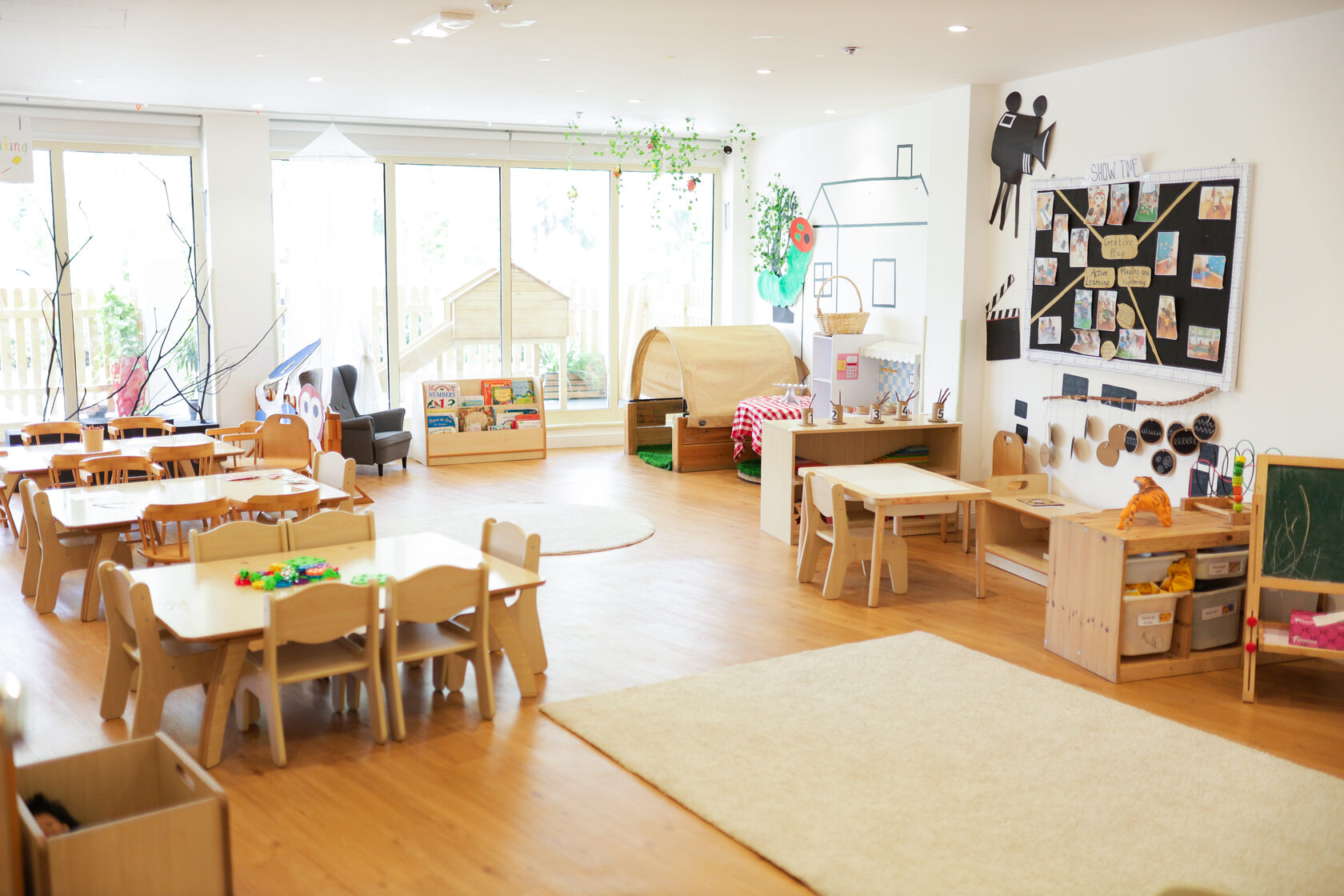
The EYFS (Early Years Foundation Stage) is the framework used in England for children from birth to five. It sets out how young children learn and develop, and how nurseries and schools should support them. In Dubai, British nurseries and British schools follow the same framework, so a child who starts at a British nursery moves into a British school's Foundation Stage without a change of approach.
You'll often see two school-style names in Dubai:
- FS1 – for children aged three to four;
- FS2 – for children aged four to five, the last year of the EYFS before Year 1.
From the 2026–27 academic year, the UAE counts a child's age for FS1 and FS2 on 31 December of the year they start, rather than 31 August. A child needs to be three by 31 December to start FS1, and four to start FS2.
The seven areas of learning
The EYFS divides early learning into seven areas. Three are called prime areas, because they underpin everything else and matter most for the youngest children:
- Communication and language – listening, understanding and speaking.
- Personal, social and emotional development – feelings, friendships, confidence and self-care.
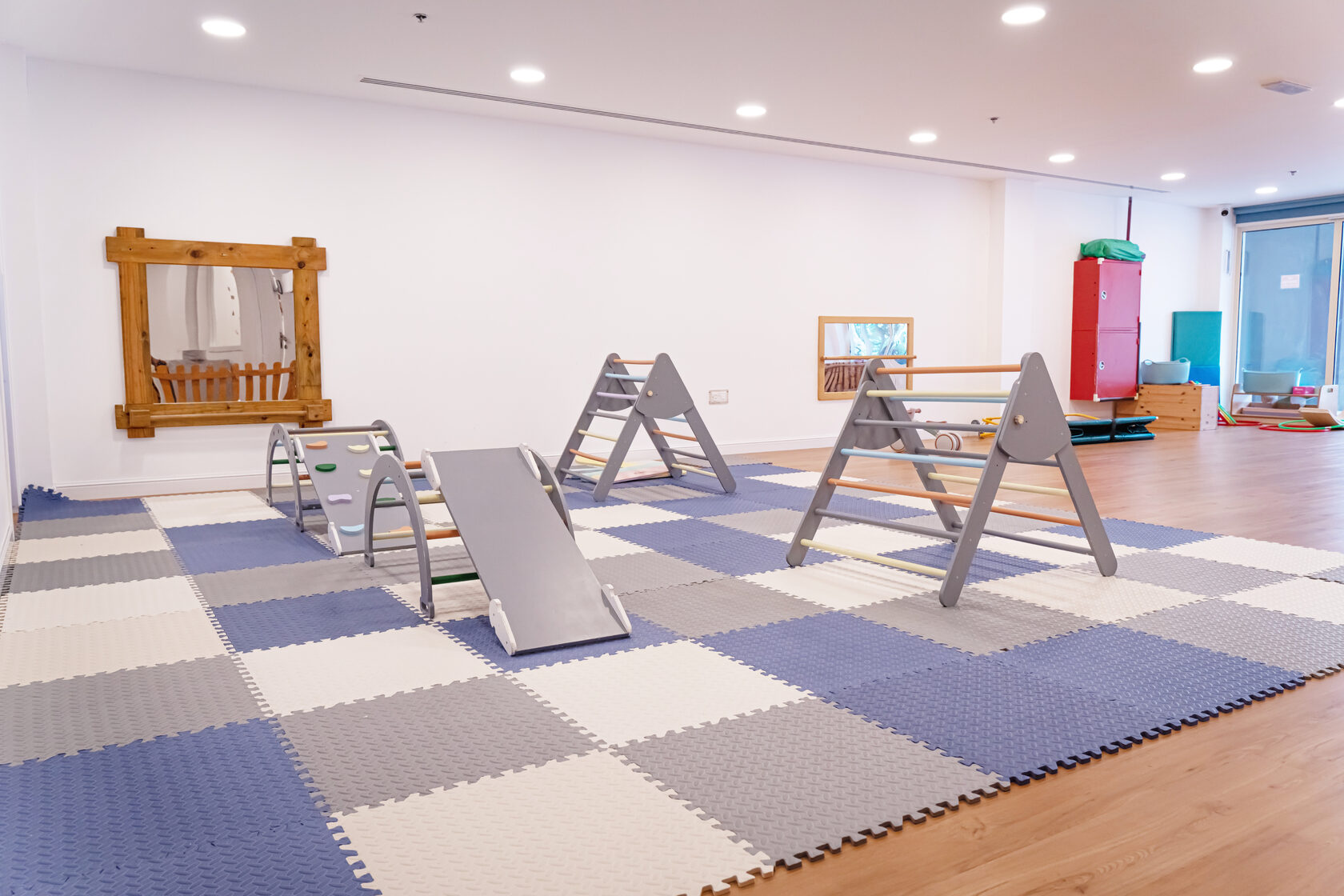
- Physical development – big movements like climbing and running, and fine motor skills like holding a crayon.
The other four are specific areas, which grow in importance as children get older:
- Literacy – early reading and writing.
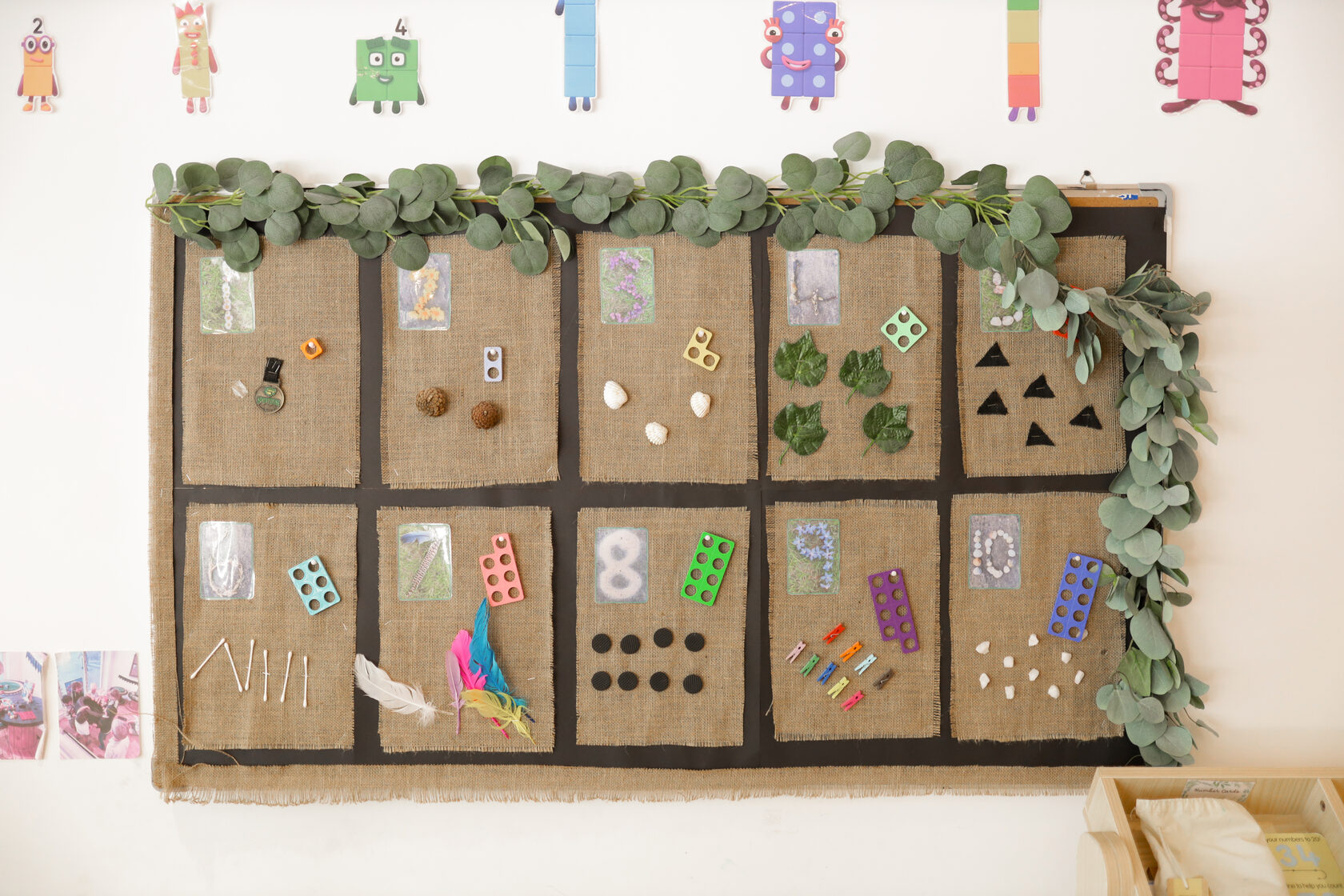
- Mathematics – numbers, shapes, patterns and early problem-solving.
- Understanding the world – people, places, nature and how things work.
- Expressive arts and design – art, music, dance, role-play and imagination.
How children learn in the EYFS
The EYFS is play-based. It doesn't mean children "just play" – it means play is the main way they learn. The framework describes three ways children learn best:
- Playing and exploring – investigating and trying things out.
- Active learning – concentrating, keeping going and enjoying achievements.
- Creating and thinking critically – having their own ideas and finding ways to do things.
Adults plan the environment and activities around each child's interests and next steps, rather than teaching the whole group the same thing at the same time.
How progress is checked
The EYFS has two formal checkpoints in England:
- a progress check at age two, which looks at the prime areas;
- the EYFS profile at the end of the Reception year, which compares each child with 17 Early Learning Goals. In British schools in Dubai, the equivalent year is usually FS2.
Between these points, staff observe children during everyday play and share progress with parents.
EYFS stage by stage
0–1 years: the very beginning
For babies, the focus is on feeling safe, loved and connected. Warm, responsive care builds trust. Babies develop early communication through eye contact, sounds and gestures, build core strength by rolling, sitting and crawling, and start to explore the world around them.
1–2 years: first steps in social development
Toddlers want to do things themselves: feeding, choosing, trying. Vocabulary grows quickly, and simple sentences appear. Children start playing alongside others and, with support, begin to share and take turns. Walking, climbing and stacking develop coordination.
2–3 years: growing confidence
Children manage more personal tasks, like dressing and tidying up, and make simple choices. They form longer sentences, ask questions and follow instructions. Play becomes more imaginative and cooperative, and children learn to understand other people's feelings.
3–4 years (FS1): foundations of learning
The specific areas come to the fore. Children begin to recognise letters, try early writing, count, notice shapes and patterns, and explore simple science through nature and experiments. Role-play and group activities build empathy and self-control.
4–5 years (FS2): ready for school
Children read simple words, write short sentences and talk confidently. They work with numbers and simple calculations, ask questions about cause and effect, and express themselves through art, music and dance. Teamwork and managing emotions prepare them for Year 1.
Questions to ask a nursery about the EYFS
- How do you plan activities around my child's interests?
- How will you share my child's progress with me?
- How do you support children who need more time in one area?
- How do you prepare FS2 children for Year 1?
- Which extra activities run alongside the EYFS?
The EYFS at Paddington Nursery JLT
Paddington Nursery in JLT has followed the EYFS since 2014, caring for babies and children from 45 days to five years. Our approach is child-centred and play-based, adapted to each child. Children aged three to five also take part in our "Education Starts Here" activities, which support early reading and writing through storytelling and hands-on exercises.
Alongside the EYFS, children learn Arabic every day and can join weekly ballet, football, robotics and woodcraft. Our indoor gym and playground keep children active during the hot summer months, and more than 350 graduates have moved on to Dubai's international schools.
We're at Armada Towers, Cluster P, JLT, open daily from 8 AM to 6 PM. Book a tour and see the EYFS in action.
Frequently asked questions
What does EYFS stand for?
EYFS stands for Early Years Foundation Stage. It's the framework used in England for children from birth to five, and it's followed by British nurseries and schools in Dubai.
What are the seven areas of the EYFS?
Communication and language; personal, social and emotional development; physical development; literacy; mathematics; understanding the world; and expressive arts and design.
Is FS2 the same as Reception?
FS2 is the name British schools in Dubai usually give to the final year of the EYFS, which in England is called Reception. After FS2, children move into Year 1.
Sources
- EYFS statutory framework (seven areas of learning, progress check at age two, EYFS profile, Early Learning Goals)
- FS1 and FS2 age cut-off from 2026–27
- Paddington Nursery JLT (ages, approach, enrichments, hours, address)
